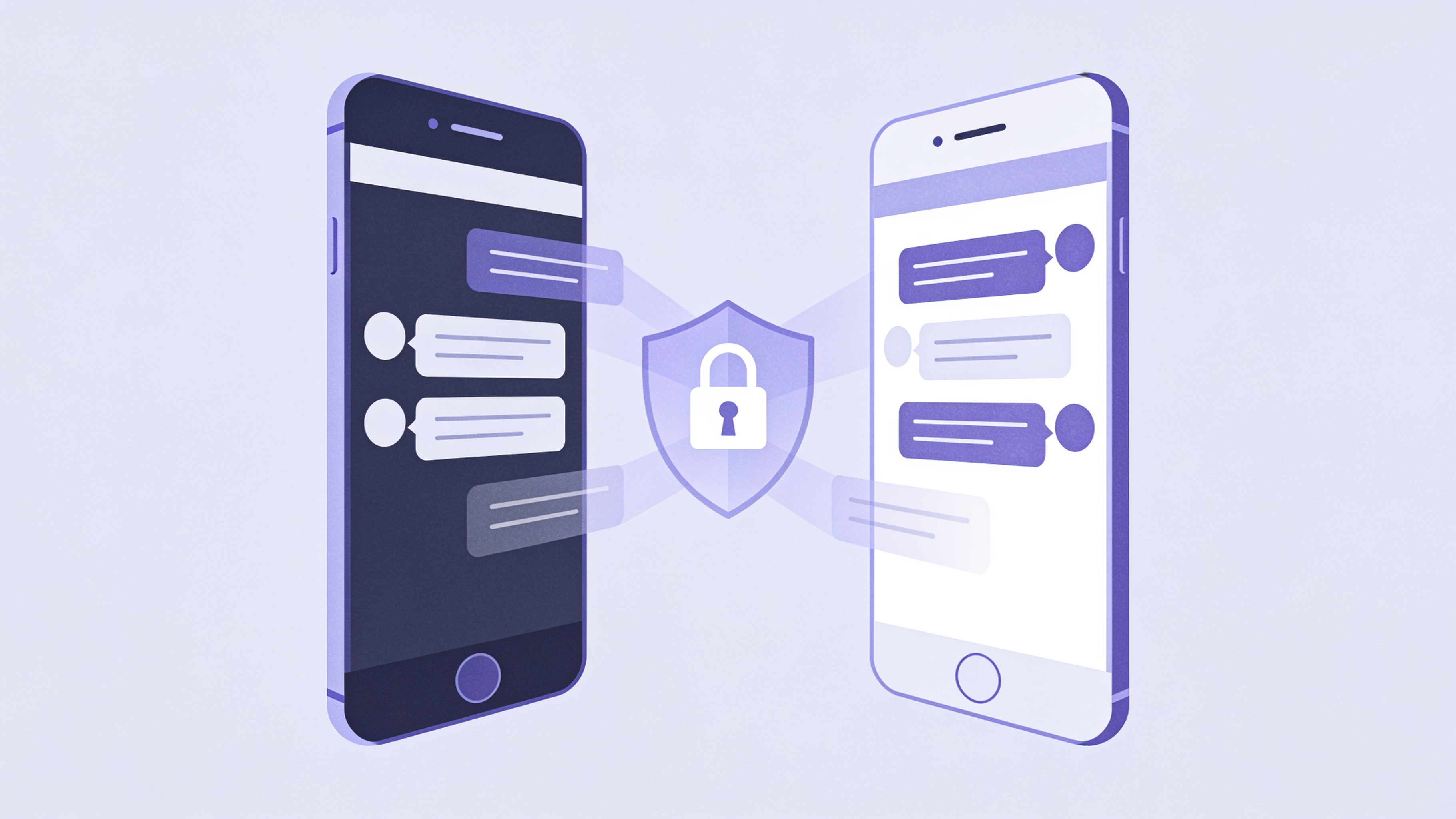
Signal unveiled a new security feature called Automatic Key Verification on August 11, 2026, designed to protect its users against man-in-the-middle (MITM) attacks. The deployment comes in a tense context: for several months, hackers linked to Russian intelligence services have been conducting large-scale phishing campaigns targeting users of the encrypted messaging app.
An alternative to manual safety numbers verification
Until now, Signal offered a safety numbers system that allowed two users to manually verify each other's identity, ideally during an in-person meeting or through a trusted secondary communication channel. While this mechanism remains one of the most robust on the market, it suffers from a major flaw: it is rarely used in practice, as it is tedious and not user-friendly.
The new Automatic Key Verification feature is based on a cryptographic concept called key transparency. As Katherine Yen, a software engineer at Signal, explains in the official blog post:
“This verification system ensures that the association between a phone number or username and its public encryption key is globally consistent and transparent to all participants in the Signal ecosystem. This protects against scenarios where a key is replaced without the owner’s knowledge — for example, if a malicious party compromised Signal and associated a different key with your contact's phone number.”
In practice, the user can enable the feature via Settings > Privacy > Advanced > Automatic Key Verification. To verify a contact's public key, you simply open the contact's profile, click on "View safety number," then on the "Verify automatically" button. If the verification is successful, a green checkmark and the message "Encryption verified" will appear.
How key transparency works
The system relies on an elegant analogy, detailed by Signal in its blog. The central idea is to maintain an immutable public ledger that chronologically records each key change associated with an identifier (phone number or username). This ledger is supplemented by prefix trees (index books) that allow for efficient searches — through binary search — without having to go through the entire ledger.
Three verification mechanisms work together:
- Self-monitoring: the application periodically checks that the records associated with your own identifier are correct in the ledger.
- Peer verification: you can verify a contact's identifier in the ledger, and vice versa.
- Third-party audits: Cloudflare and Trail of Bits act as independent notaries, signing each page of the ledger to ensure that there is only one consistent version of the data.
This last point is crucial: without third-party audits, a malicious operator of the central directory could present different views of the ledger to different users (a so-called split-view attack), rendering verification ineffective. Auditors ensure that each edition of the index only differs from the previous one by a single entry, and that no prior page has been secretly modified.
Signal clarifies that all user data in the ledger is cryptographically masked: public identifiers are processed through a verifiable random function (VRF), and the associated values are protected by a keyed hash function. Auditors therefore never have access to unencrypted data.
Protection against a rare but critical scenario
Signal acknowledges that the attack this feature aims to counter — a "Mallory in the middle" — is "very advanced and unlikely." It would require either that an external actor bypass the security of major cloud providers or that a privileged insider deliberately target a specific account. Nevertheless, the organization believes that this type of protection is necessary in principle, especially for high-risk users.
It is important to note that key transparency does not verify the identity of the person controlling a phone number or username. It only ensures that all devices in the Signal ecosystem share the same view of the association between an identifier and a public key. Additional verification (for example, confirming a safety number change through a secondary channel) remains necessary to detect a scenario where an attacker has taken full control of your contact's account.
Another current limitation: to automatically verify a contact, you must have their phone number. If you are connected only via a username without having exchanged numbers, automatic verification is not possible at this time.
Context: the growing pressure from Russian attacks
The deployment of this feature comes as Signal faces a wave of sophisticated attacks. In May 2026, Signal had already introduced new warning messages and in-app confirmations to protect users against phishing and social engineering, in response to attacks attributed to state-sponsored Russian hackers.
These attacks, documented by the FBI, German authorities, and the Dutch government, exploited Signal's Linked Device feature. Attackers, posing as "Signal Support," sent fake alert messages urging targets to link a device controlled by the hackers, thereby gaining access to conversations and contact lists.
By the end of June 2026, the FBI and CISA released an alert update revealing that tactics had evolved: attackers were now attempting to steal users' Backup Recovery Keys. Posing as Signal support and invoking a supposed "mandatory two-factor verification," hackers urged victims to enable backups, then to copy and paste their recovery key into a message — allowing attackers to restore chat history on their own devices.
Shortly thereafter, the U.S. State Department announced rewards of up to $10 million for any information leading to the identification or location of members of the UNC5792 and UNC4221 groups, linked respectively to the FSB (Russian security services) and the Russian military services. According to the U.S. government, thousands of individual messaging app accounts have been compromised by these campaigns.
Typical targets include U.S. and NATO government officials, diplomatic personnel, military and intelligence staff, political analysts, journalists covering Russia and Ukraine, NGOs supporting Ukraine, and security researchers specializing in Russian affairs.
A complement, not a replacement
Signal wants to reassure users: Automatic Key Verification does not replace the existing safety numbers system. Users who prefer not to rely on Signal or independent auditors can disable automatic verification in the privacy settings and continue to use manual verification.
Key transparency is part of a broader effort to improve the usability of security. As Signal points out: “Key transparency provides an easy-to-use way to confirm an important part of messaging security, complementing our existing safety numbers system.”
The source code of the key transparency server is open source, implemented from a previous version of the IETF's key transparency protocol, with adjustments specific to Signal's needs.
Key takeaways
- Automatic Key Verification is now available in Signal, enabled in Settings > Privacy > Advanced.
- It relies on a key transparency system audited by Cloudflare and Trail of Bits.
- It protects against man-in-the-middle attacks where an encryption key might be substituted without the user’s knowledge.
- It complements but does not replace manual safety numbers verification.
- Its deployment echoes the intensification of Russian phishing attacks (UNC5792, UNC4221) targeting Signal users, particularly through the theft of backup recovery keys.
- A limitation: automatic verification of a contact requires having their phone number.